
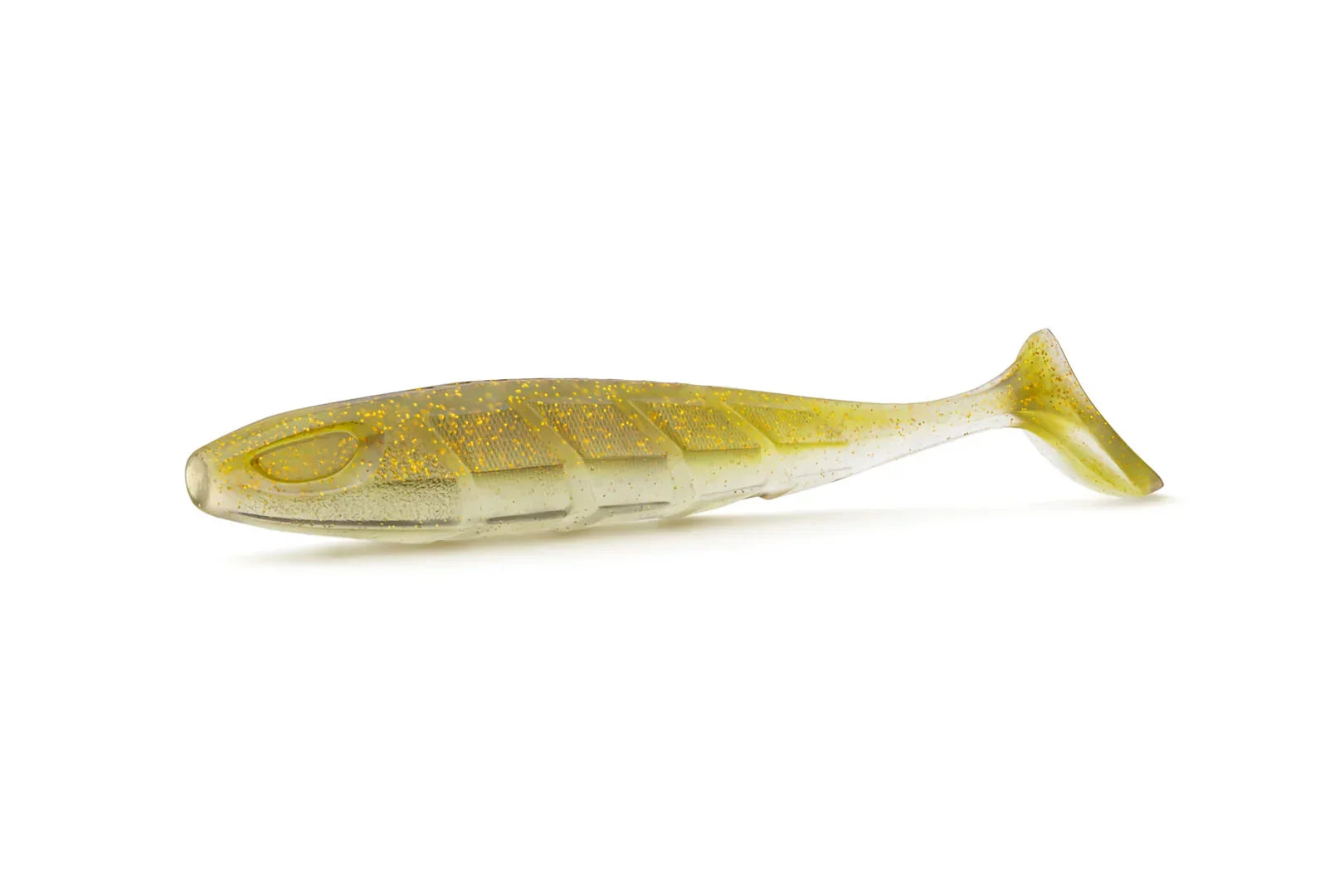
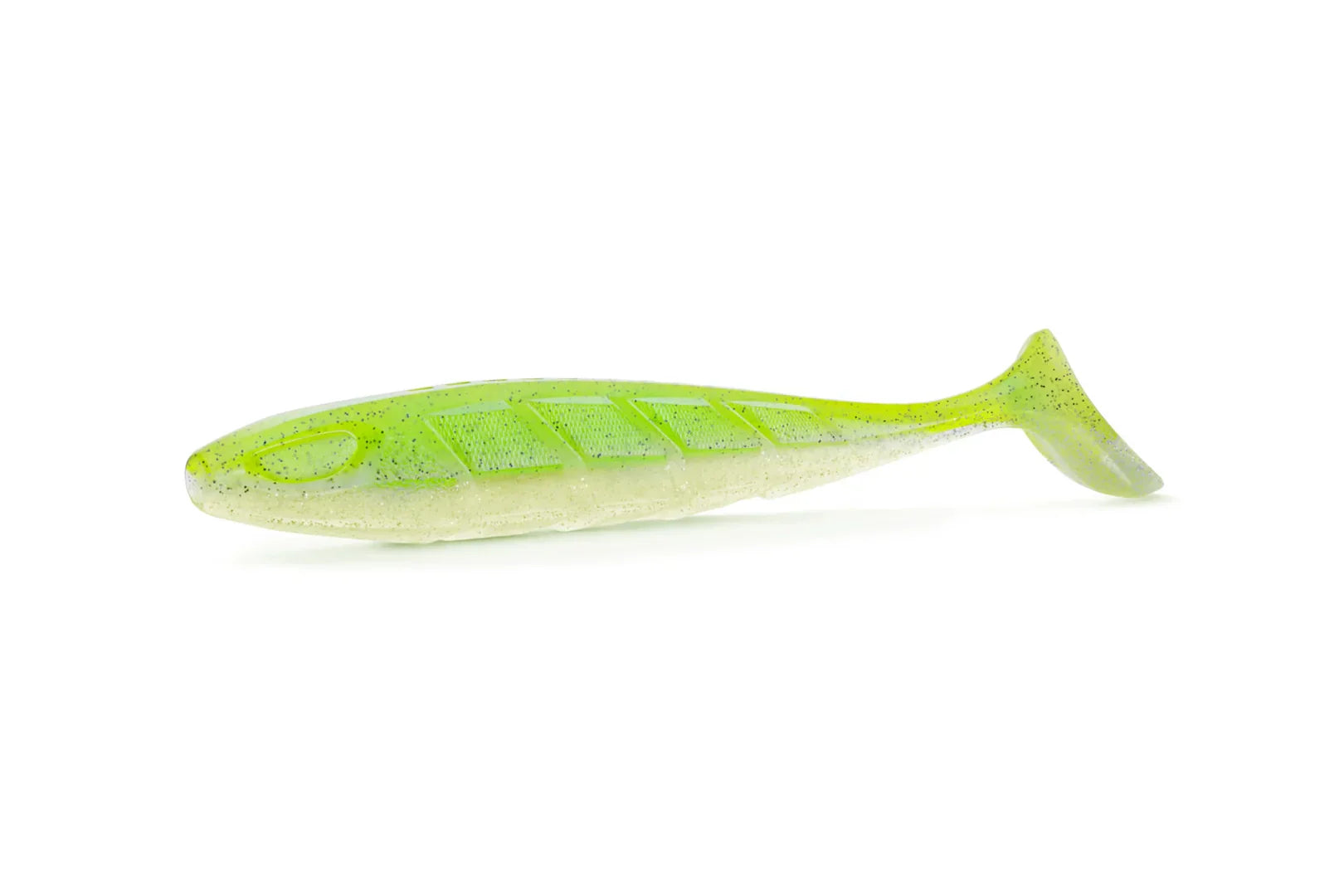
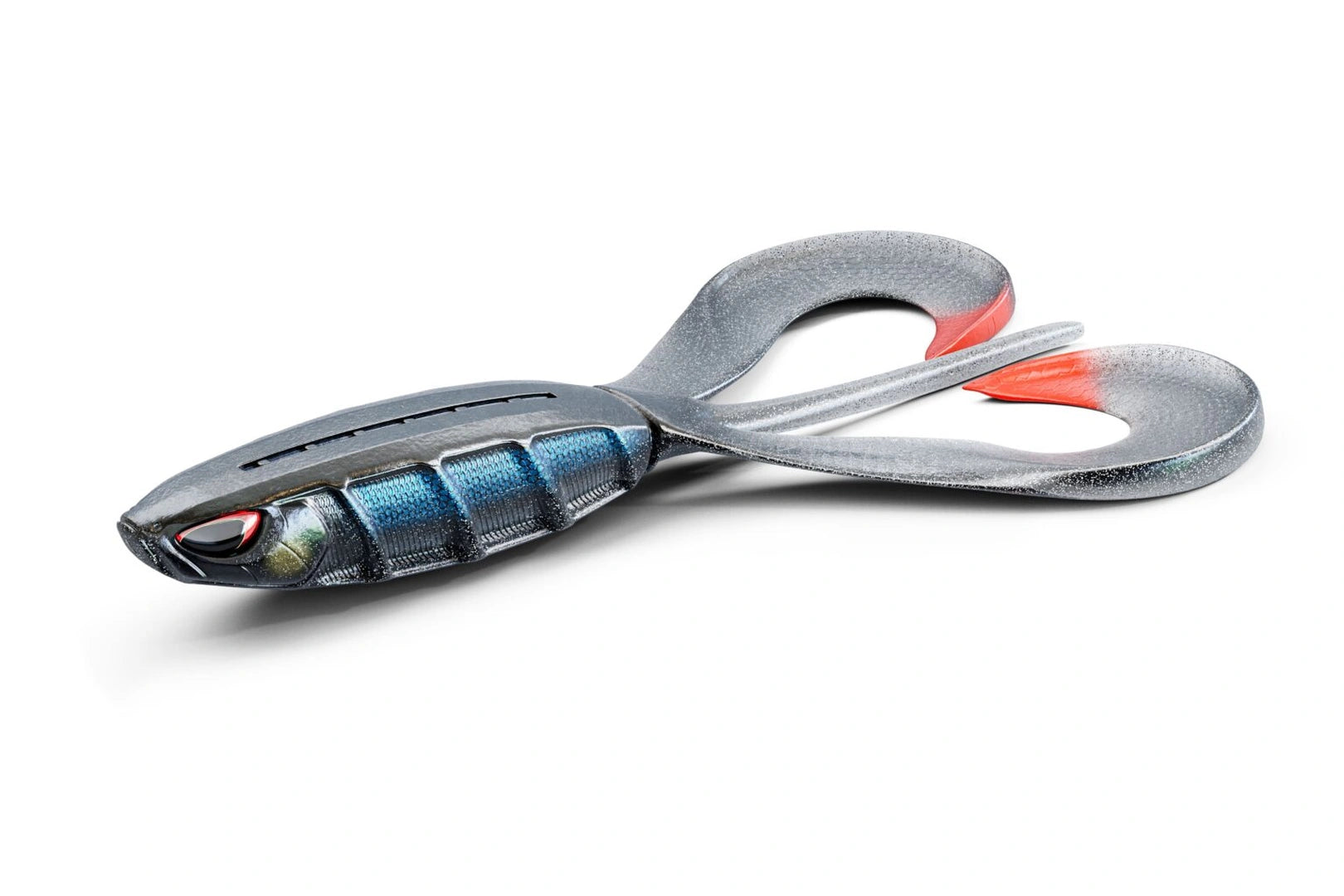
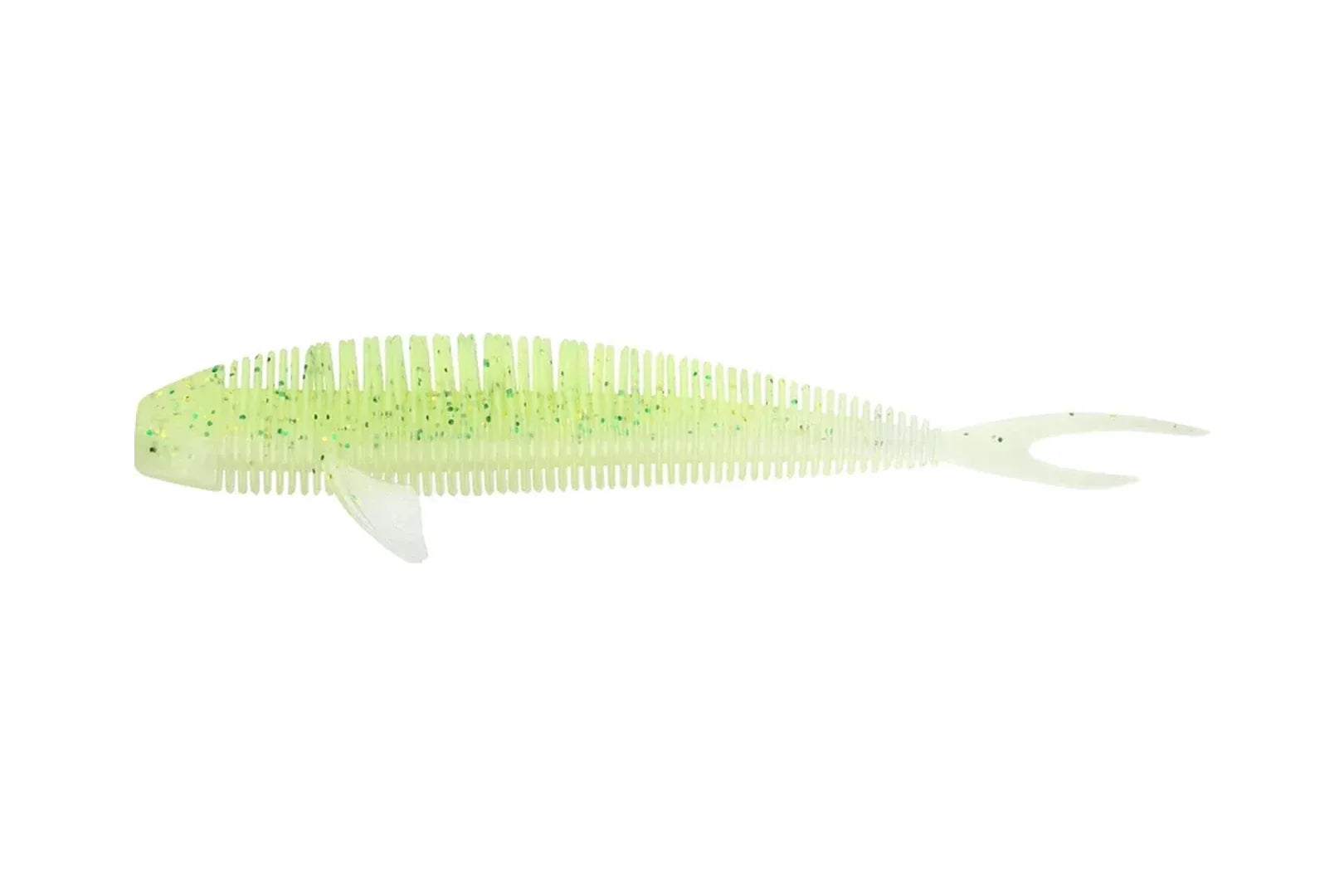
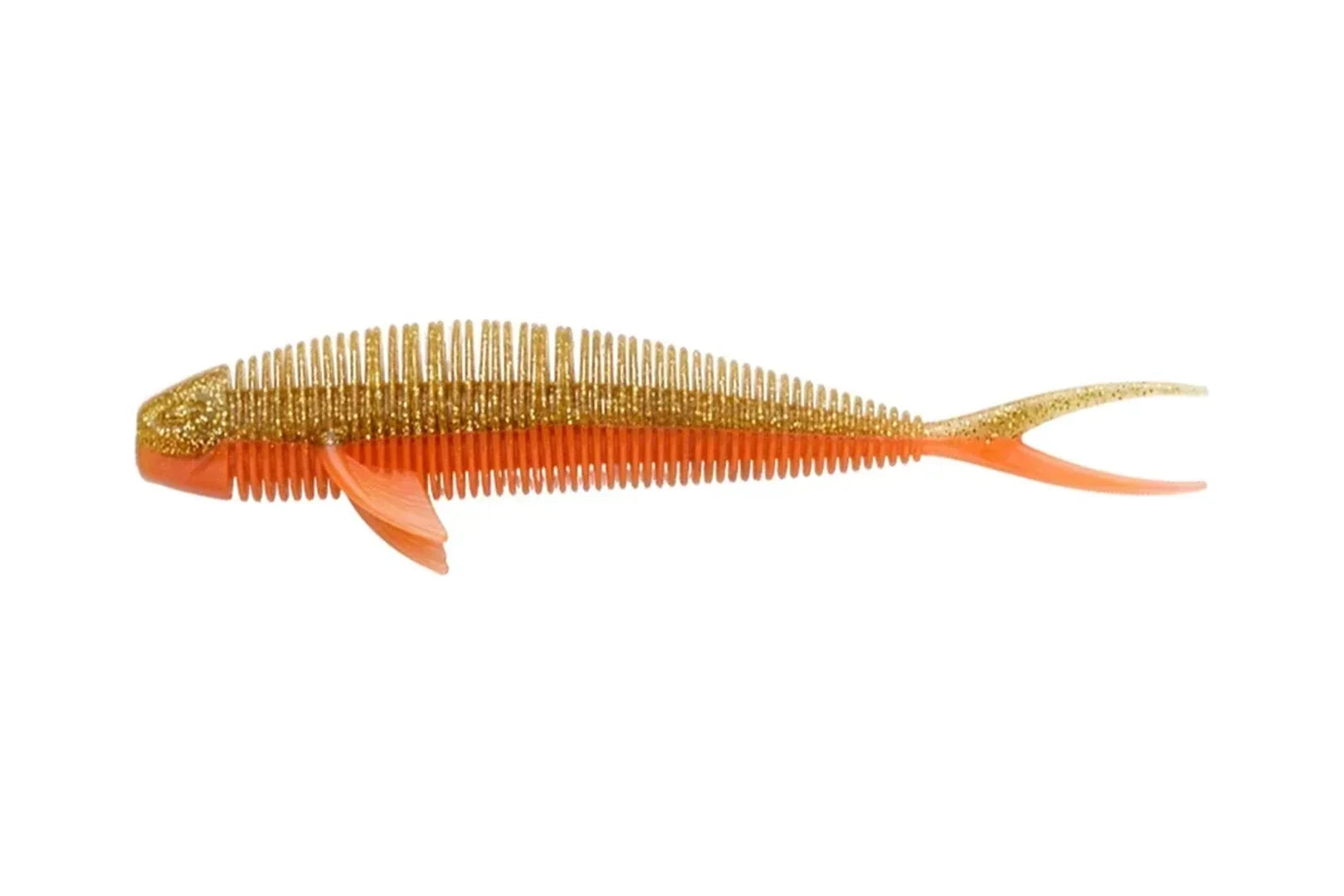
The Frapp Dotty Dart has no paddle, no curl and no rattle. What it has is a slim, soft body and a passive V-shaped tail, and that combination gives you something a shad does not: a lure that darts, glides and hangs, and that only moves when you tell it to.
Work it with the rod and it walks left-right-left through midwater like a baitfish in trouble. Let it fall on a slack line and it hovers, tail flaring, for as long as you leave it there.
That makes it a lure you can fish in a lot of different ways. In this Charlie's Fishing article we go through the four rigs we use most:
- Weightless on a big offset hook — the weedless rig for shallow, snaggy water
- On a Cheburashka — the same presentation with more distance and depth
- On a screw-in weight — to change sink rate without re-rigging
- On a jig head — for hard bottom contact
After that we cover fishing it vertically, colour choice, leaders and which lures it pairs with.

What Makes the Dotty Dart Different
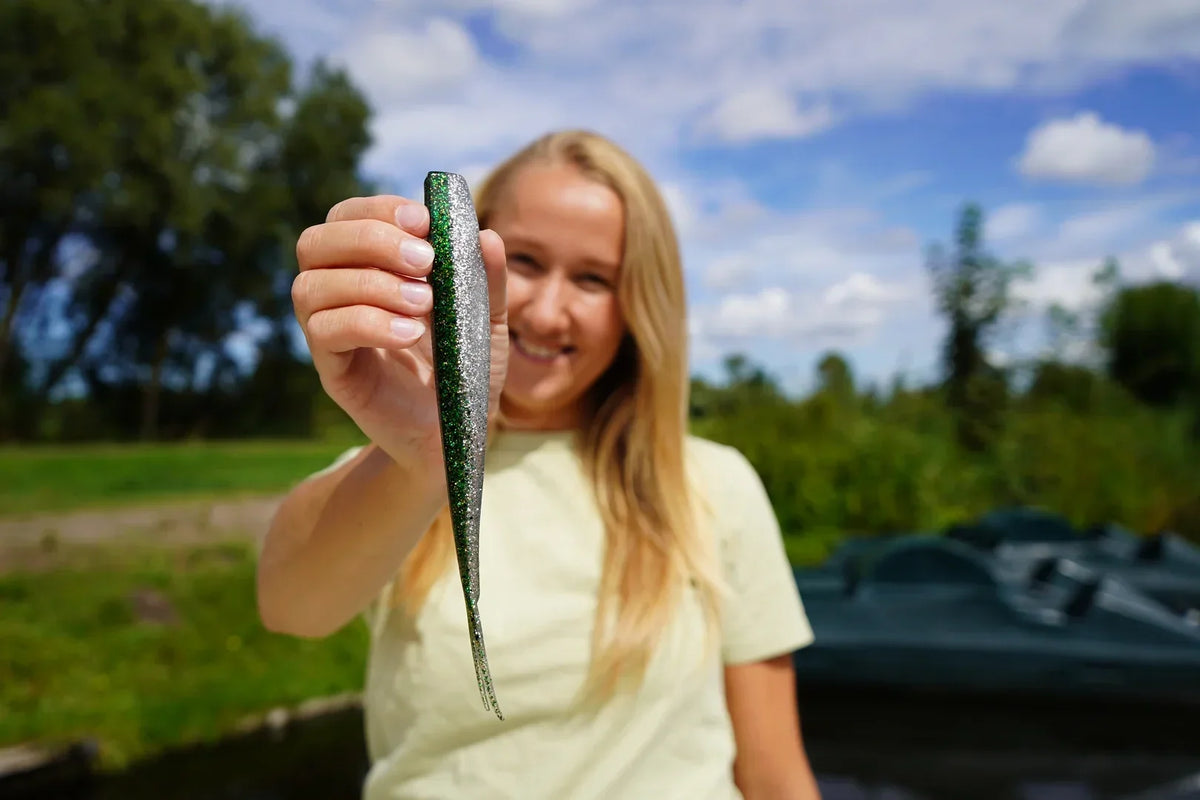
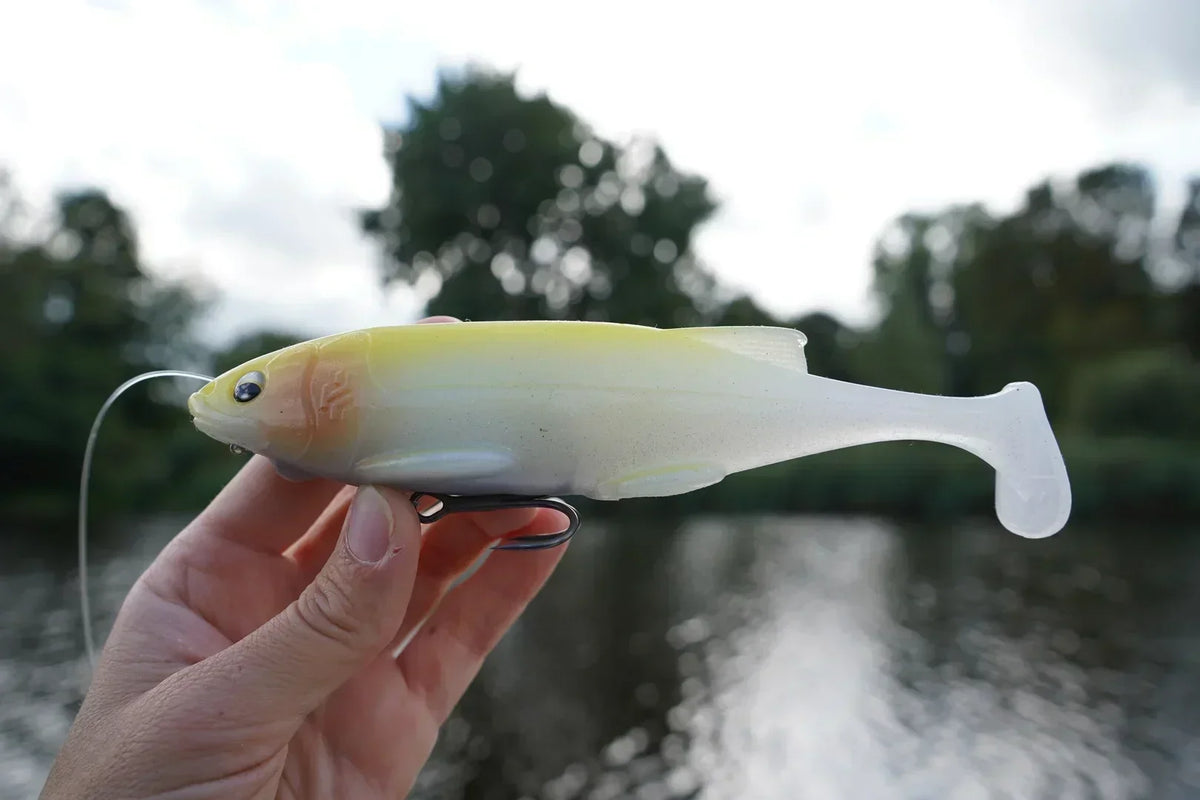
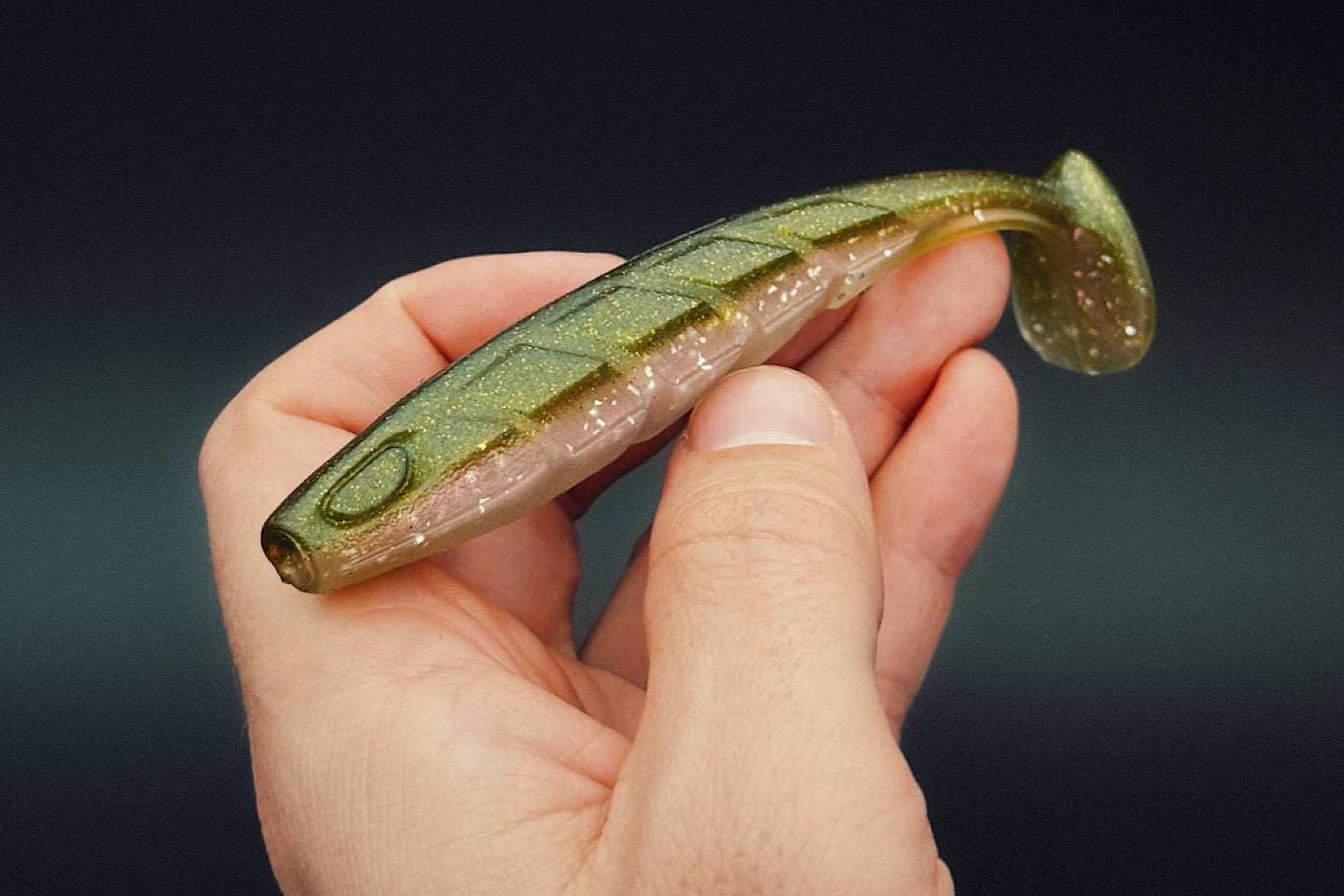
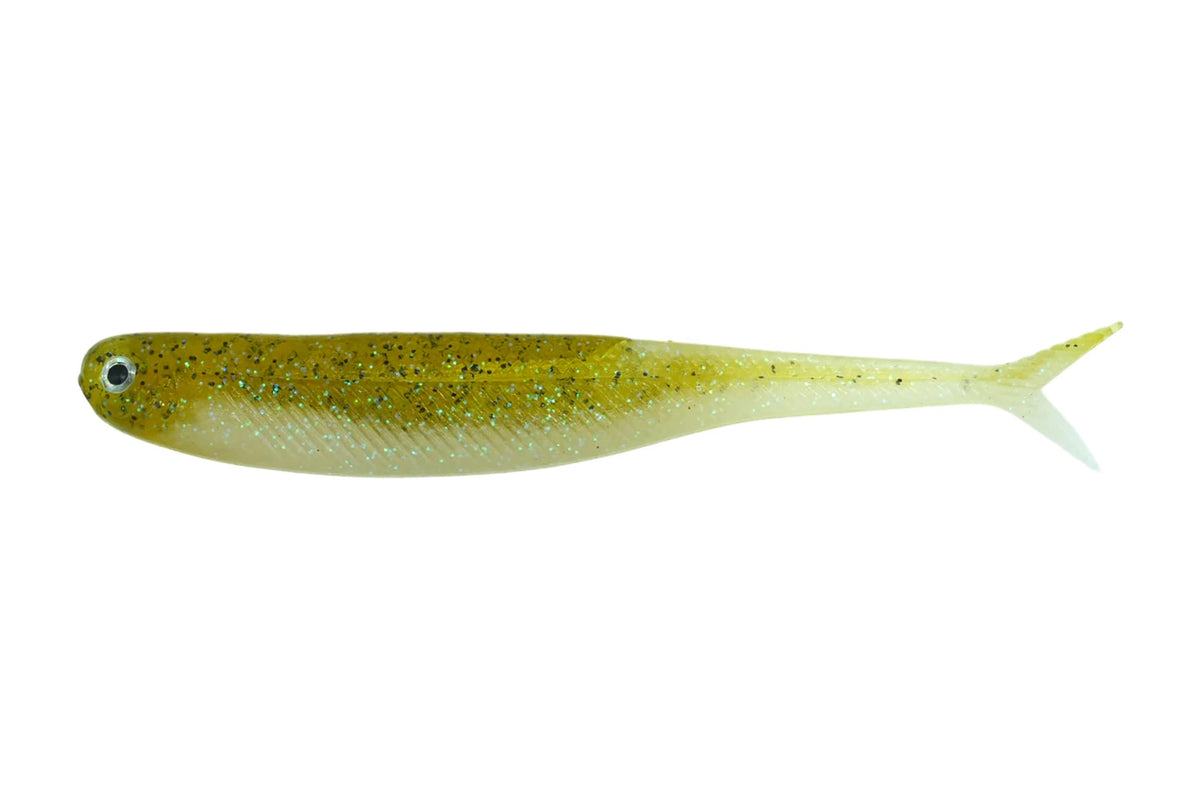
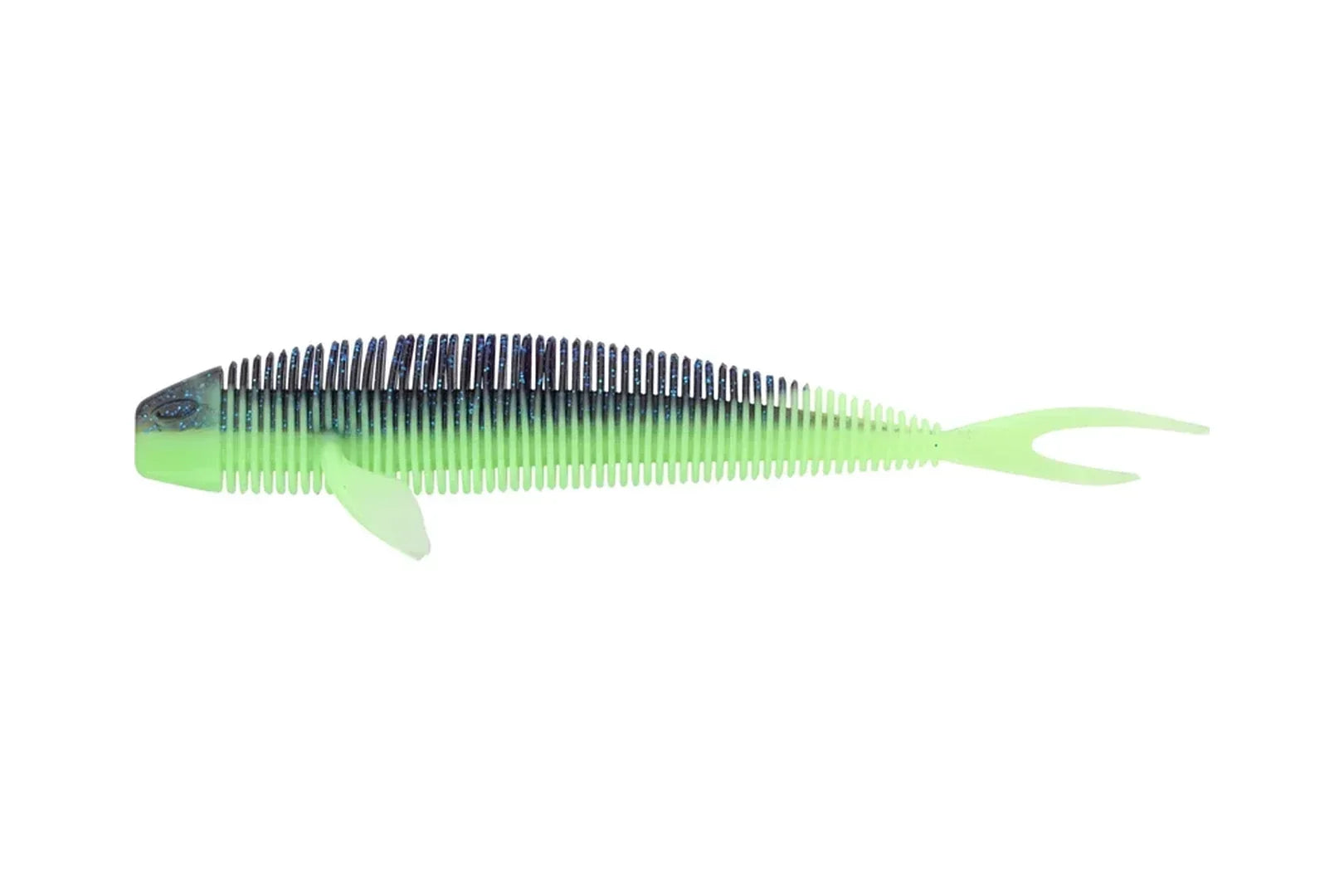
The Dotty Dart is a slim V-tail softbait: long, narrow, and largely dependent on rod input for its action. On a straight retrieve it gives you a gentle wobble. Add twitches and it starts to dart.
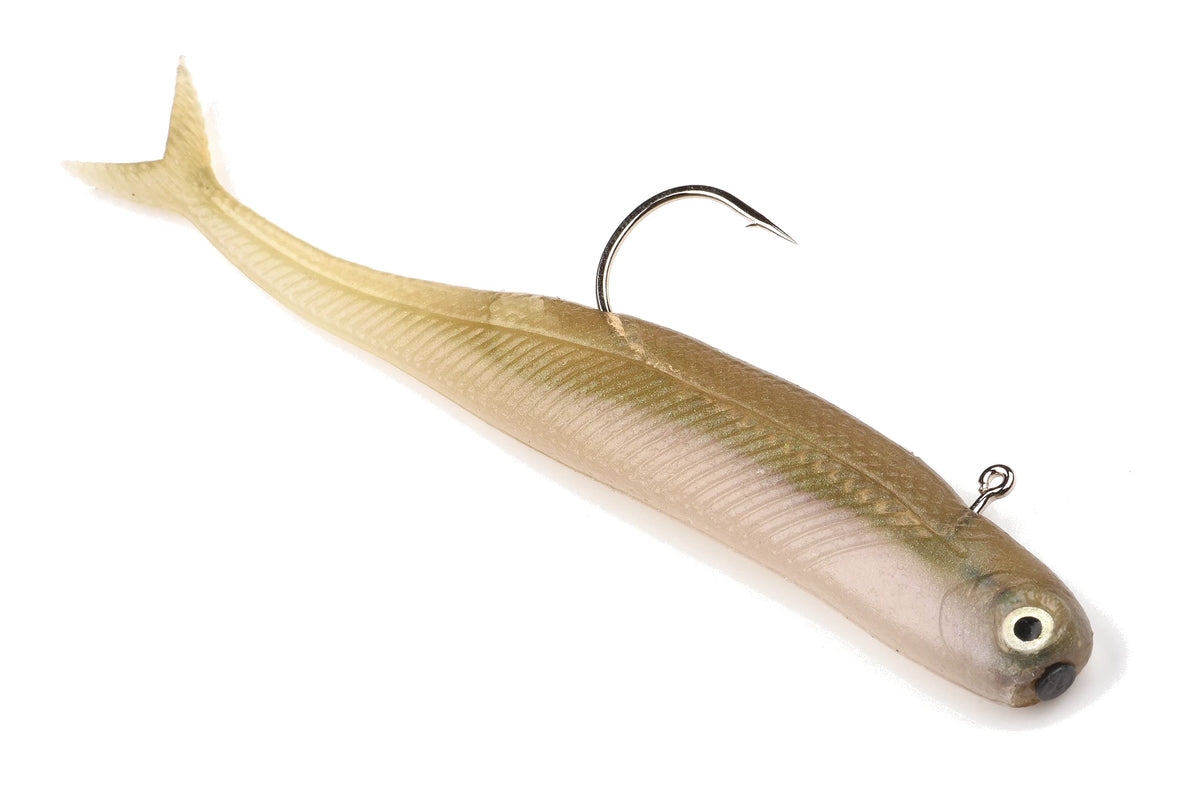
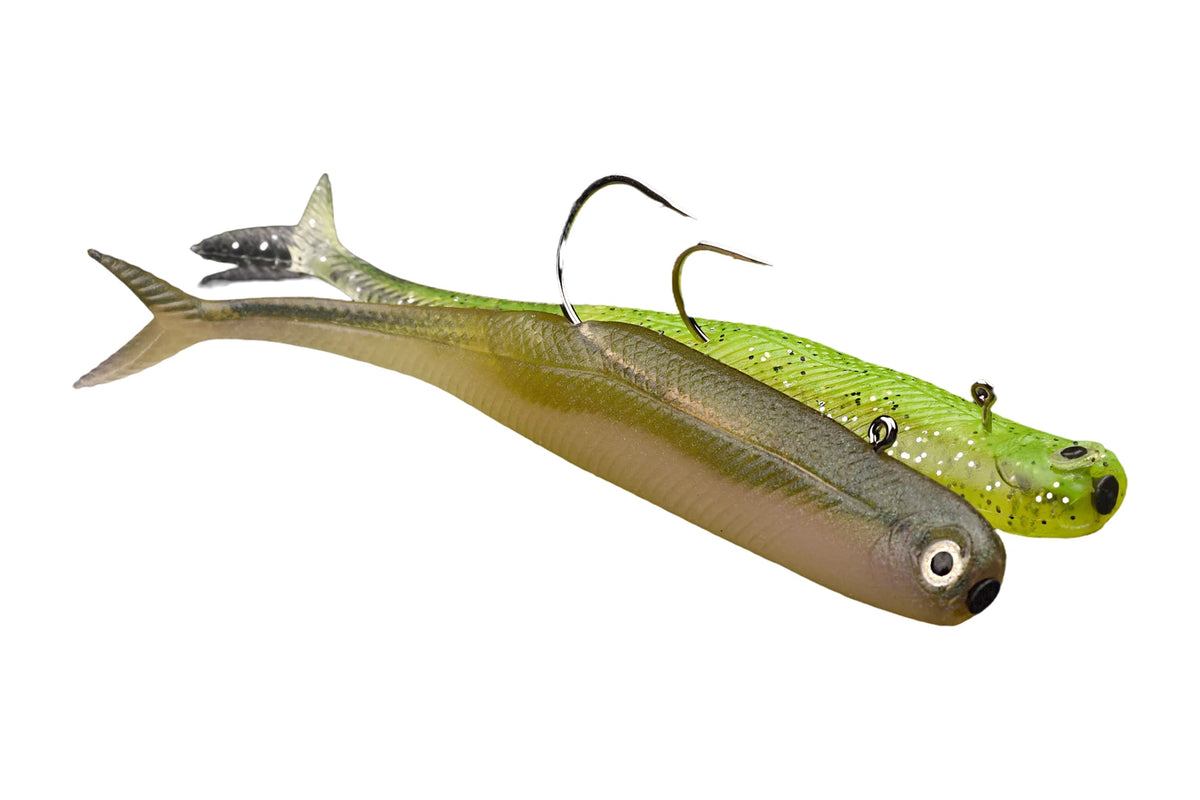
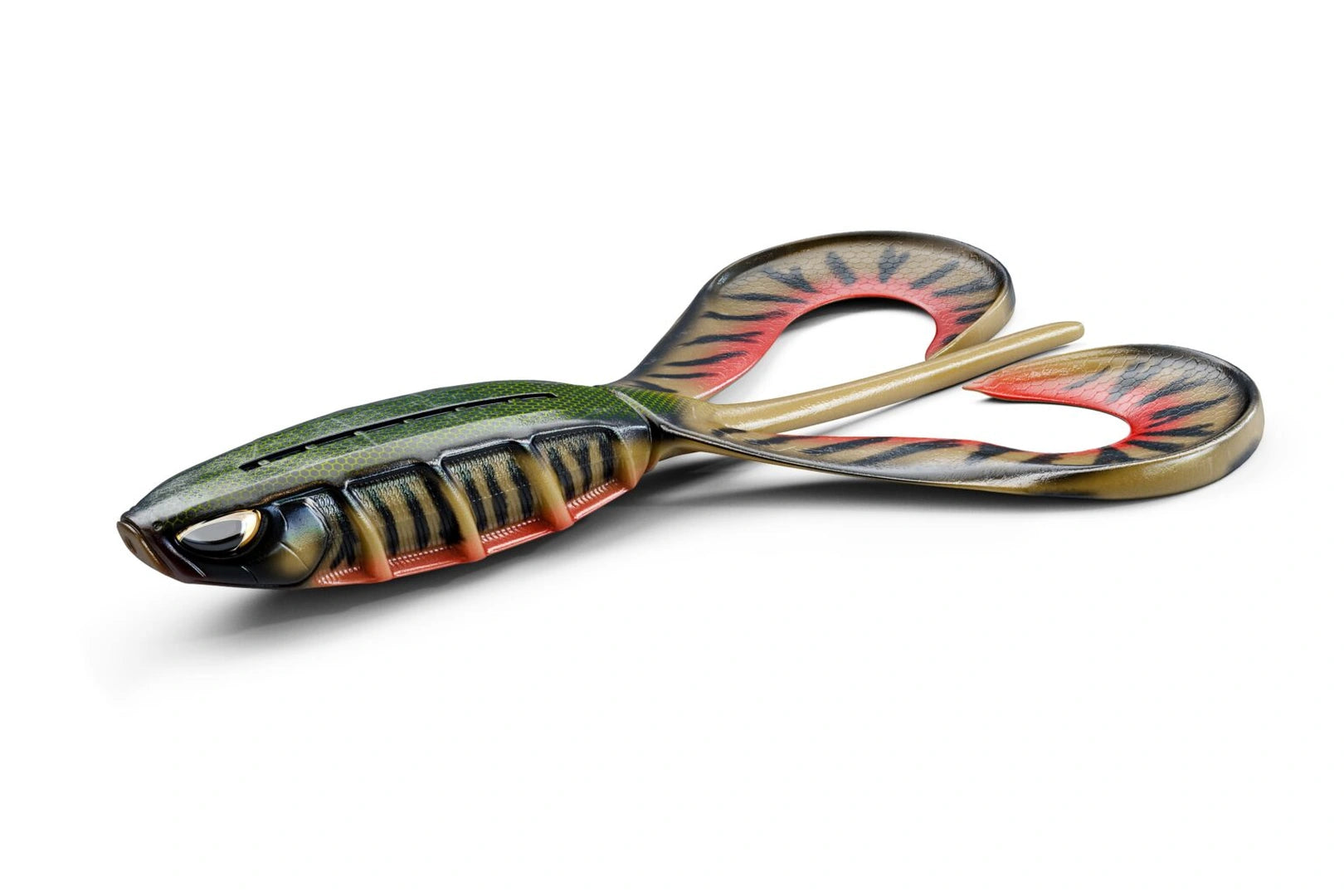
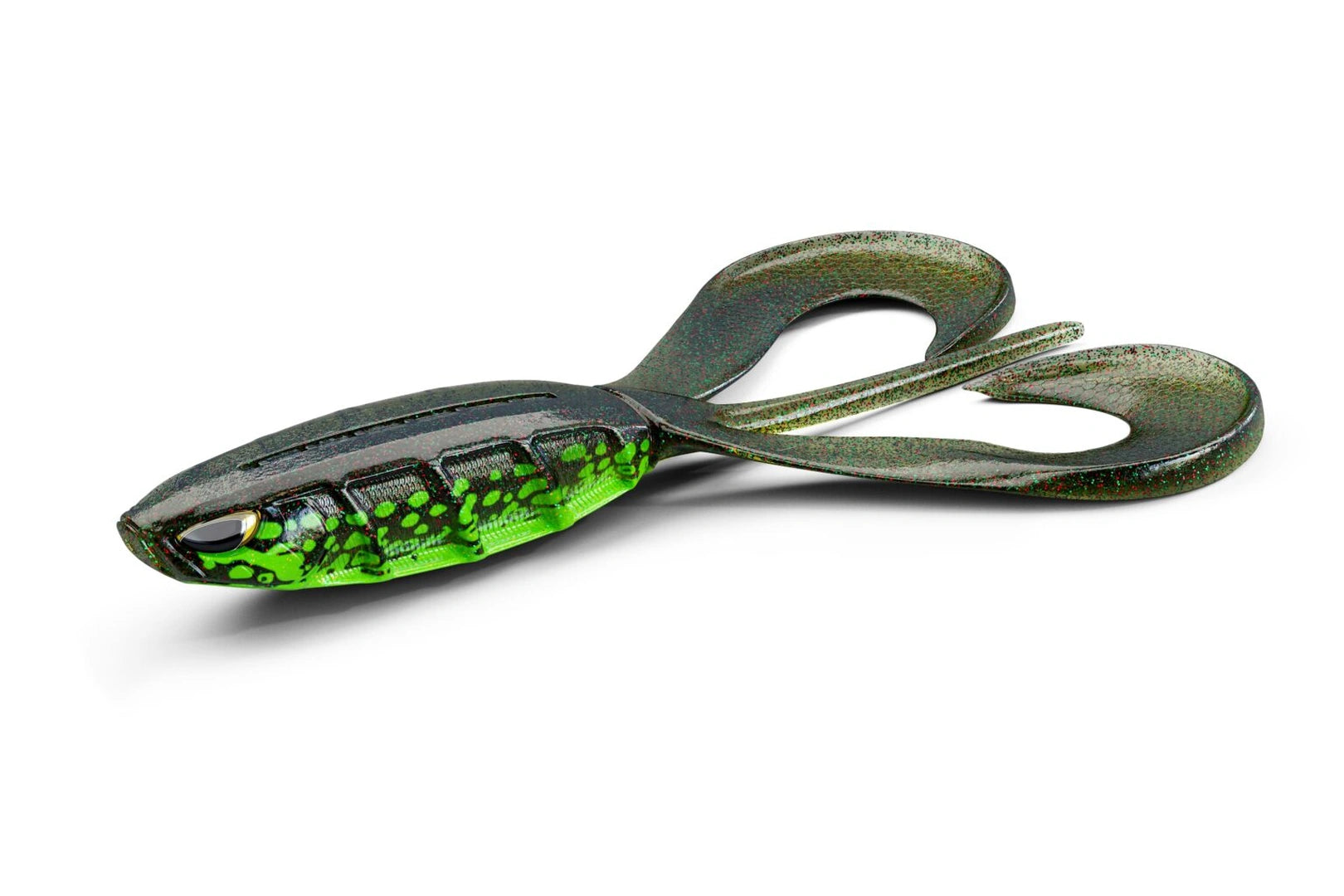
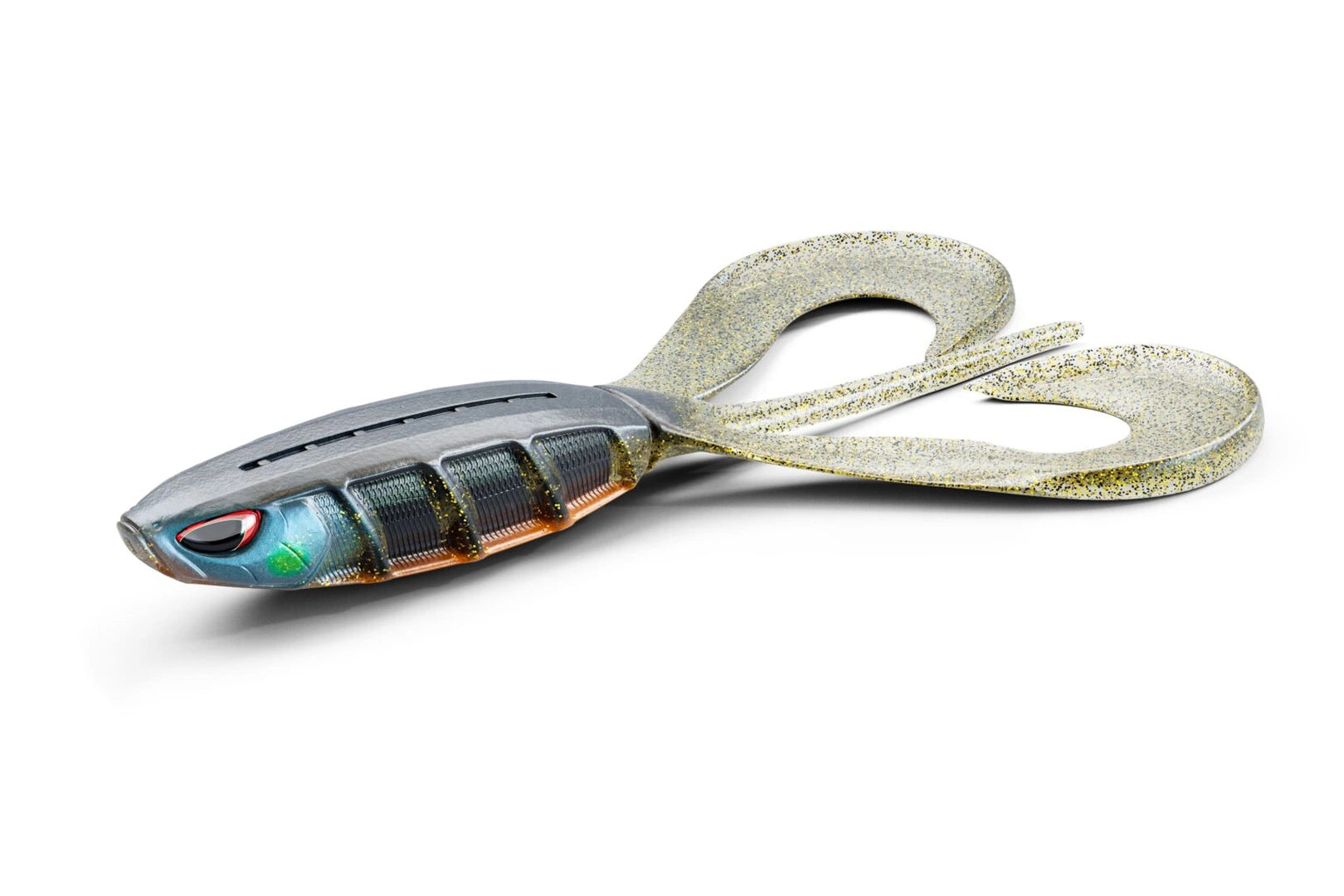
The body has a flat back and a narrow belly with a long slot running through the lower section. That slot does two things. It gives the hook shank room to sit inside the body rather than bulking it out, so the bait keeps its slim profile on an offset rig. And it makes the plastic collapse easily when a fish takes it, which helps the hook find flesh instead of pushing a wall of soft plastic around.
The V-tail is passive by design. It does not thump or vibrate, and it will not announce itself from ten metres away. What it does is flare and settle on every pause — a subtle signal aimed at a predator that is already close. If you like that style of bait, the rest of our V-Tails & Pintails range works on the same principle.
Two Sizes, Two Jobs
We carry the two sizes that cover the most water: the 6" at 15 cm and the 7.5" at 19 cm.
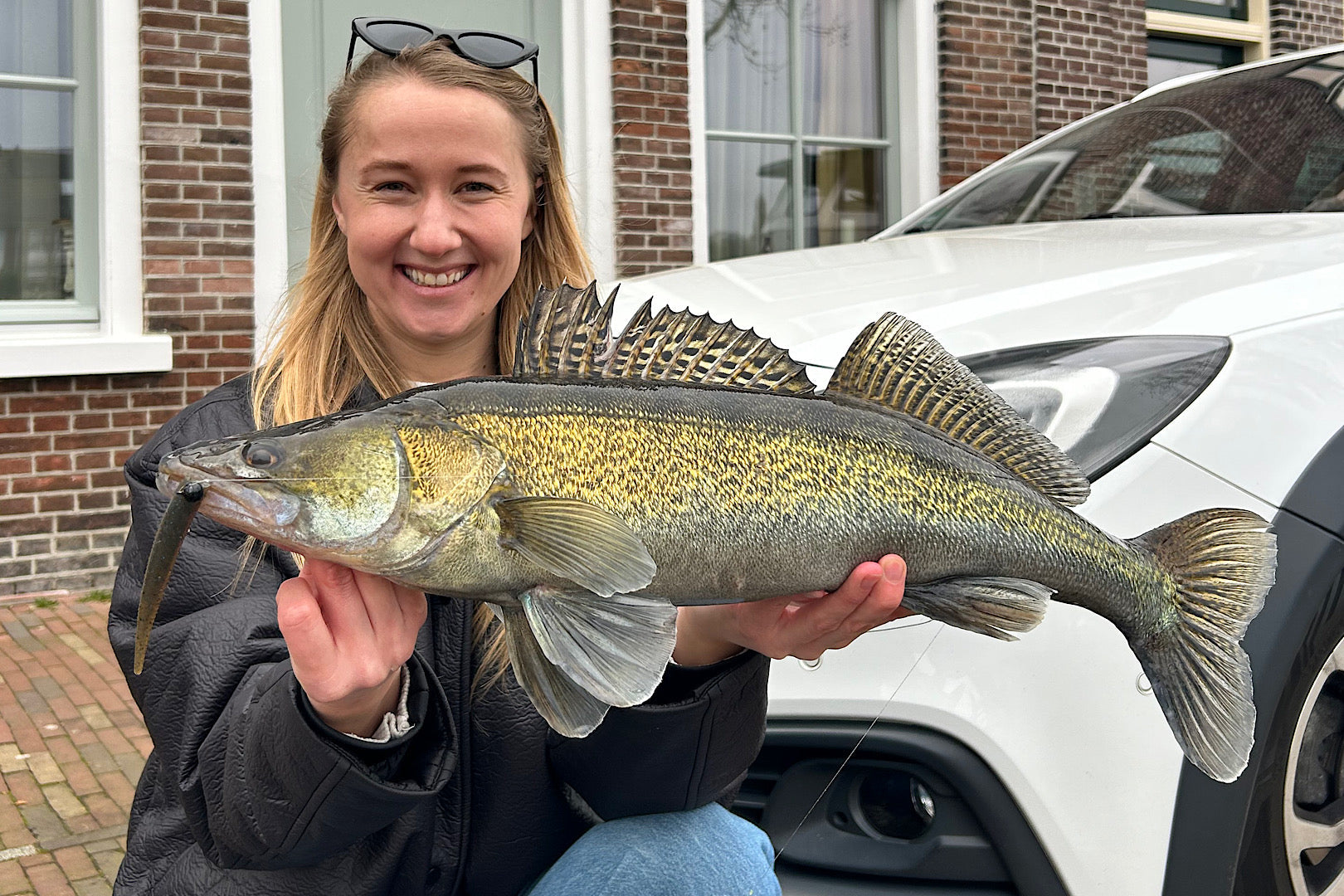
The 6" is the everyday casting size. It suits zander and mid-sized pike, it fishes on normal spinning tackle, and it is often the better choice on pressured water, in clear conditions and through the colder months. Three per pack, which helps when you are fishing a snaggy canal or a reed edge.
The 7.5" carries a bigger silhouette, holds its profile better in stained water, and casts and sinks with more authority in wind or deeper water. Two per pack.
If you are looking for the most versatile size, we generally recommend starting with the 6". The 7.5" is especially interesting when you are targeting larger pike or fishing bigger water.


Rig One: Weightless on a Big Offset Hook
This is the rig we fish most.
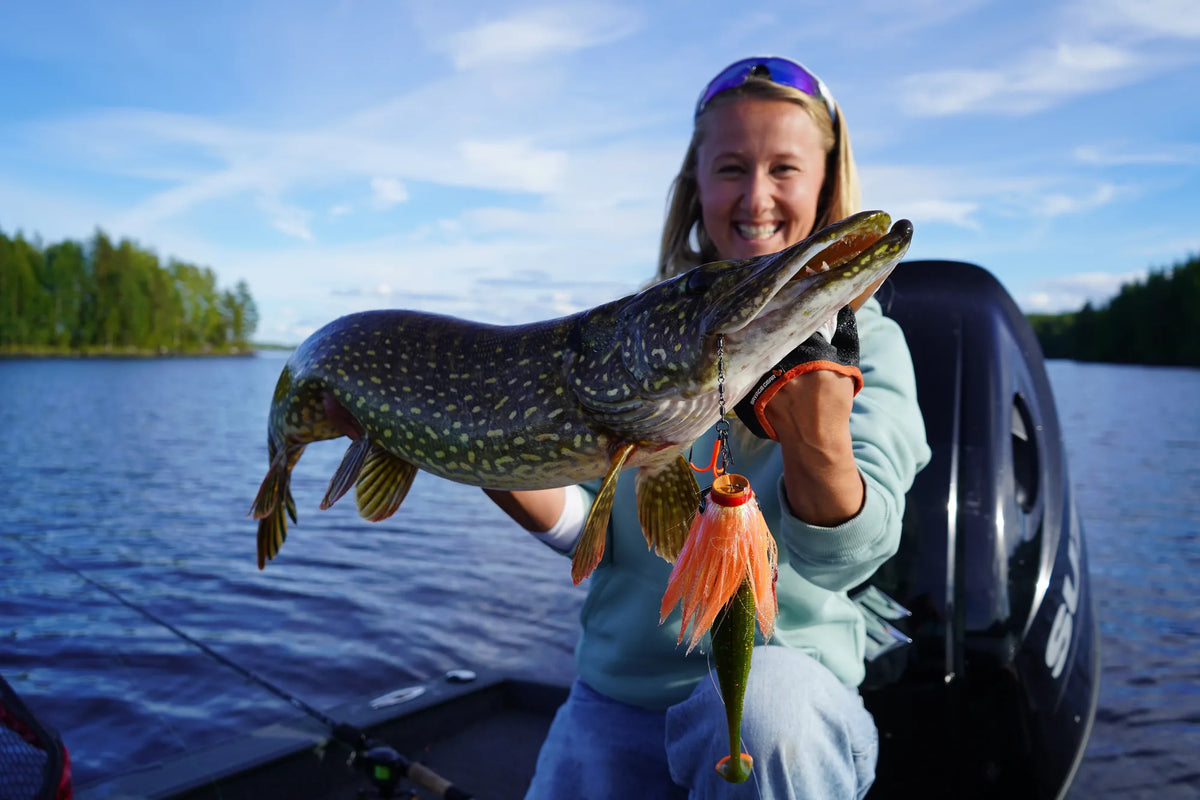
Rigged weightless on a large offset hook with the point tucked into the back of the bait, the Dotty Dart is highly weedless — far less likely to pick up weed or snag than an exposed jig hook. That lets you fish it over weed beds, along reed edges, under overhanging trees and around boat moorings.
We fish it on the BKK Predator WG, which suits the shape of this bait well. The VMC Cheboo offset hook and the VMC 7316 Texan Strong Wide Gap are good alternatives. Match the hook to the size of the bait you are fishing and make sure the gap is wide enough to clear the body on the strike.
Work it with short downward twitches of the rod tip and a little slack between each one. The lure darts left, right, left, then glides to a stop. Then you wait. Pike that will not chase a fast bait will often drift up and take it on the hang, and that take is usually a slow, heavy pull rather than a smash.
Because you are casting unweighted plastic, a rod with a tip soft enough to load on the cast helps a lot, and thin braid keeps your distance up. You feel less through the blank than with a jig head, so watch your line as well.

Rig Two: On a Cheburashka
When you want the same weedless presentation but need more casting distance, more depth or better control in current, a Cheburashka is the cleanest way to add weight.
The VMC Cheburashka clips between your leader and the eye of the offset hook, so the weight sits in front of the bait on its own link rather than inside it. That keeps the Dotty Dart free to move and lets you swap weights in seconds — from 2 g when you want an almost weightless fall to 10 g when you need to reach a deeper edge. The tungsten Camorashka versions are the more compact option; the Naturashka is the budget choice.
Because the weight hangs on a link, the bait behaves differently than on a jig head. It noses down on the pause and lifts nose-first on the twitch, with a short delay before the body follows — a head-down, tail-up posture that reads well to a zander looking up at a bait working near the bottom.
Fish it with a lift-and-glide: sweep the rod, then drop the tip and let it fall on a semi-tight line. A lot of the bites come on the drop, so stay in contact without pulling the lure off its fall.
Rig Three: On a Screw-In Weight
A screw system is the fastest way to change sink rate without re-rigging.
The Berkley Screw-In Jighead (14 g to 60 g) screws into the nose and turns the Dotty Dart into a long-range casting bait for open water. A BKK Stinger Screw or Savage Gear Cork Screw with the VMC Refill Weight in 10 to 25 grams does the same thing modularly — one screw, four sink rates.
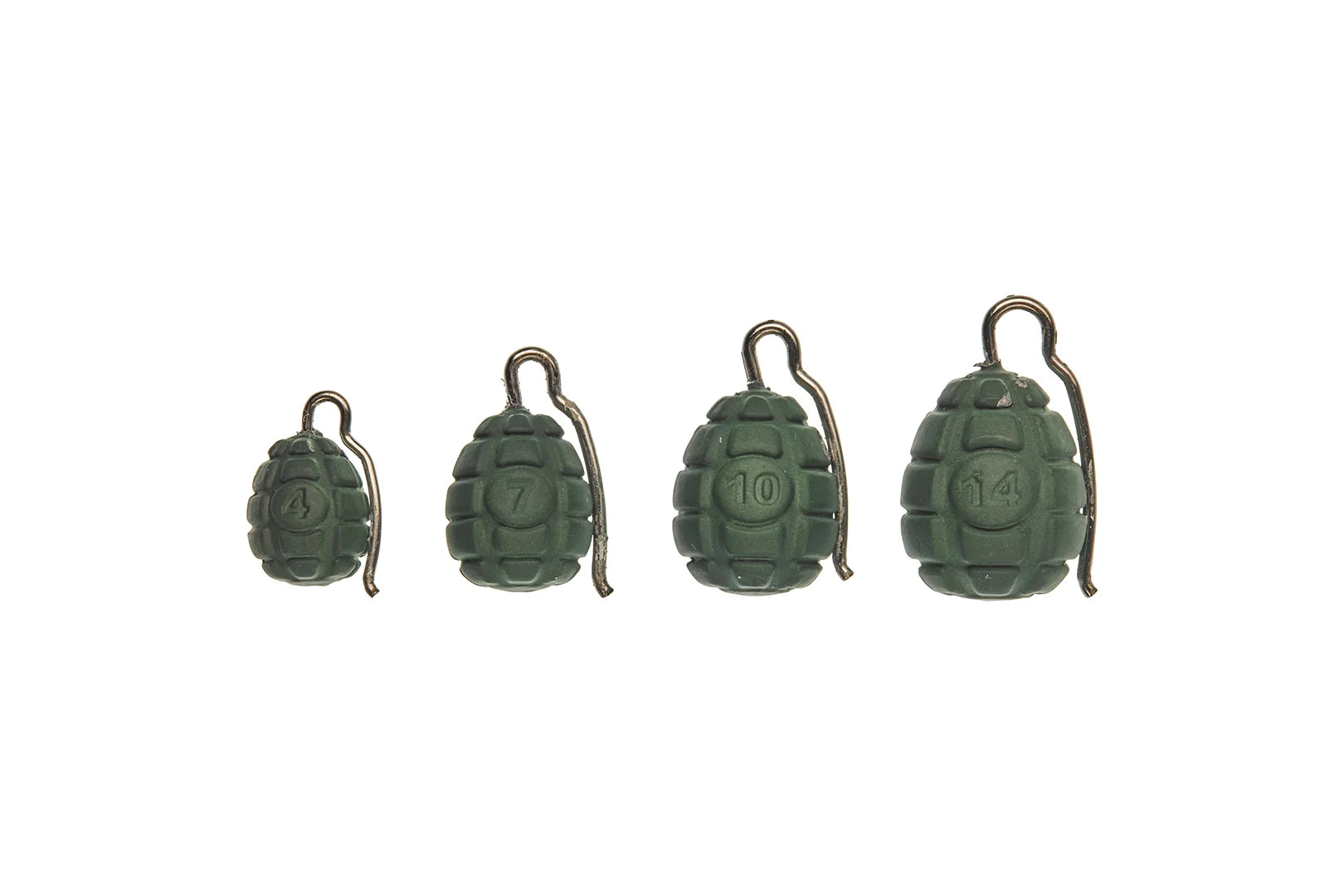
At the other end, the Toppies Nail Sinker (0.45 g to 1.8 g) is the subtle option. Pushed into a weightless Dotty Dart it barely changes the casting weight but does change the balance, so the bait sits more horizontal on the pause. On pressured pike in shallow water that can make a difference.
You will find the full range in our weights section.
Rig Four: On a Jig Head
The simplest rig, and still the right one when you want hard bottom contact — a drop-off, a channel edge, a harbour wall or a river bed.
The Toppies Tungsten Jighead (5.3 g to 10.6 g) suits the 6" in canals and moderate depth. For the 7.5" you need more hook, which is where the Toppies Tungsten Jighead BIG series (14 g to 28 g) comes in. The VMC Bullet Jig is a good-value alternative if you fish snaggy ground and lose heads regularly.
Use the lightest head that still gives you control. Too heavy and the lure falls faster than it needs to; too light and you lose contact in wind or current. And rig it straight — a softbait this long can spin if you thread the hook off-centre, which twists your line and rarely catches.

Where to Cast It
The weightless and Cheburashka versions suit the water most of us fish from the bank: reed edges and weed beds in summer, canal margins, boat moorings, bridge pillars, lock gates, harbour walls and overhanging trees. Places where a jig head would find the bottom on the second turn of the handle.
The jig head and screw-in versions are for open water and hard-bottom structure: drop-offs, channel edges, gravel pit shelves, river beds and deeper polder water.
On a new spot, it often works well to fan-cast the weightless rig first over the shallow, snaggy water, then switch to a weighted version and work the deeper edge of the same area.

Fishing It Vertically
Beyond those four rigs, the Dotty Dart also has a place in pelagic fishing — but the way it works there is different from casting.
On a heavy head — the VMC Pela Jig in 40, 60 or 80 grams, or the Charlie's Pela Jig Combo 60 g — the lure does not fall slowly. That is not the point. The weight is there to get you down to the fish quickly and keep you connected. Once the bait is at the right depth, the slim body and passive tail let you present it subtly: small taps, short lifts and long holds, with the tail flaring on every pause.
The VMC Sharpshooter and Sharpshooter Combo are the ready-made pelagic setups, and a Dotty Dart works well as a replacement body when the standard one has gone quiet.
The most common mistake here is moving the lure too much. Drop it, let it settle, give it one small tap and then hold. Watch the screen. If a fish rises, doing nothing is often better than reacting.

Colours: Naturals First, PAL Series Second
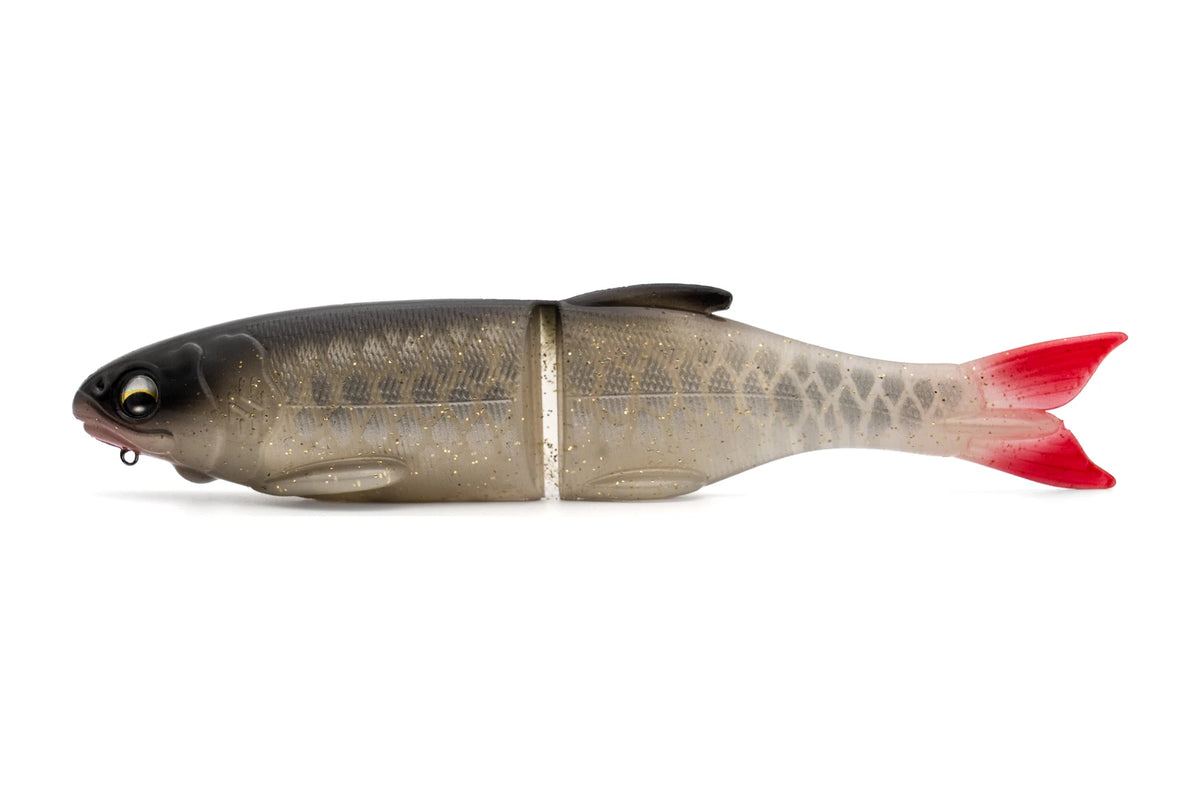
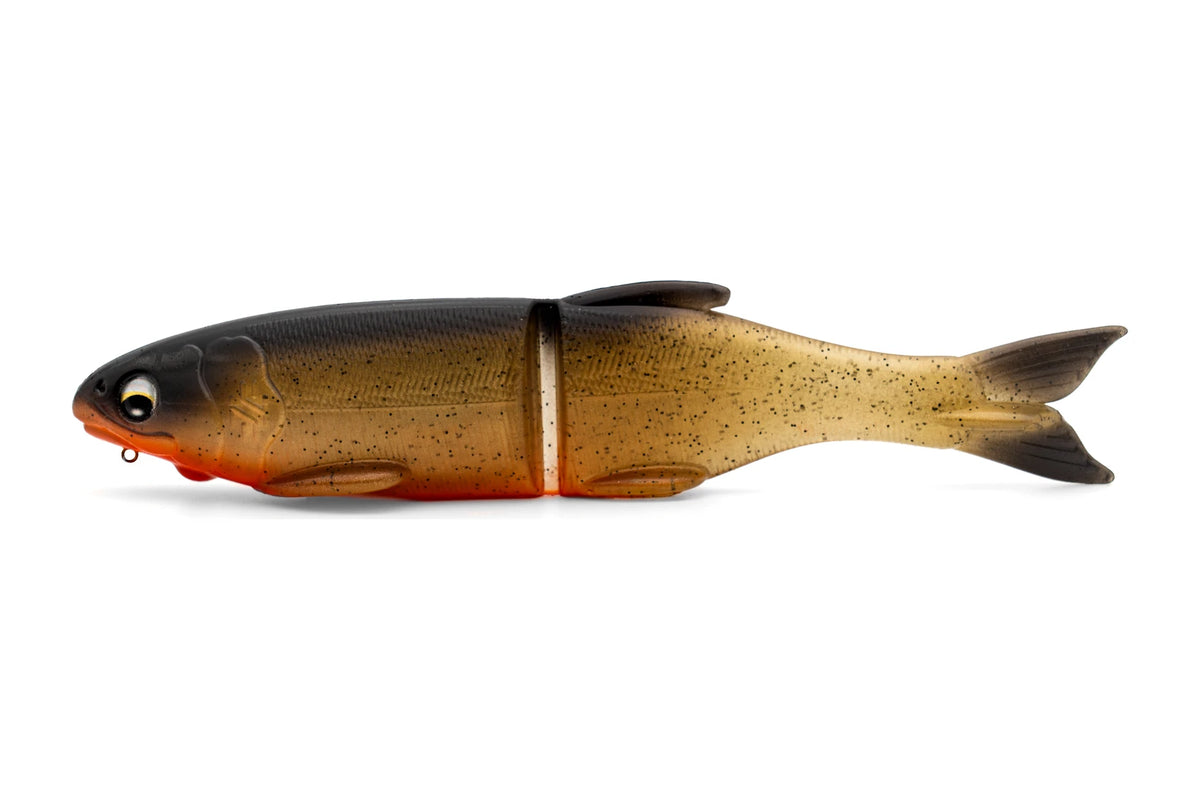
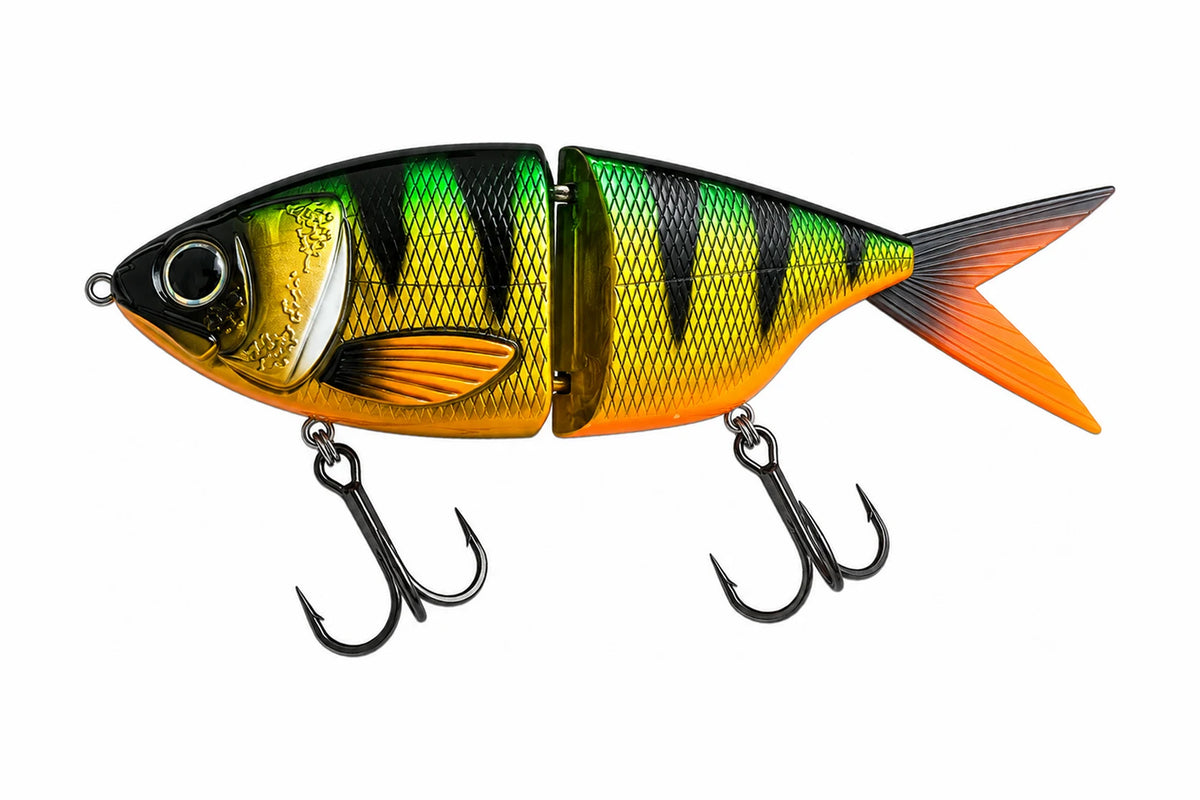
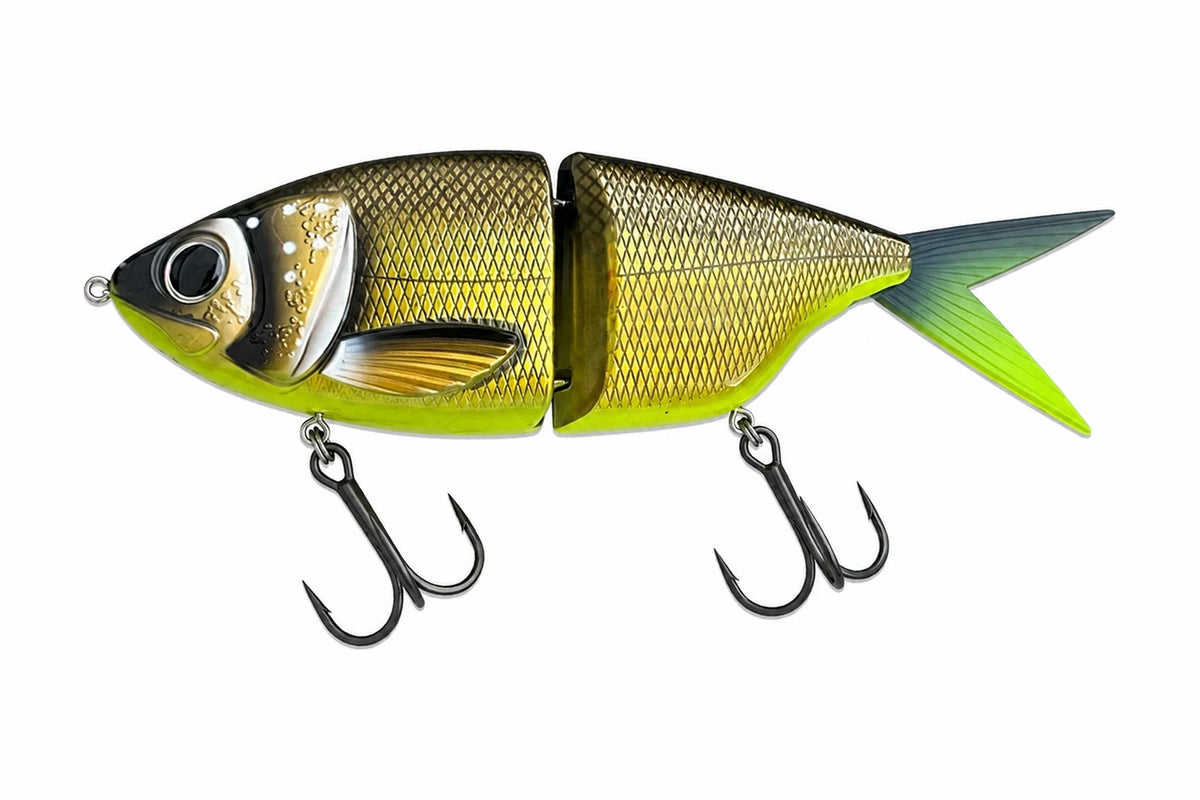
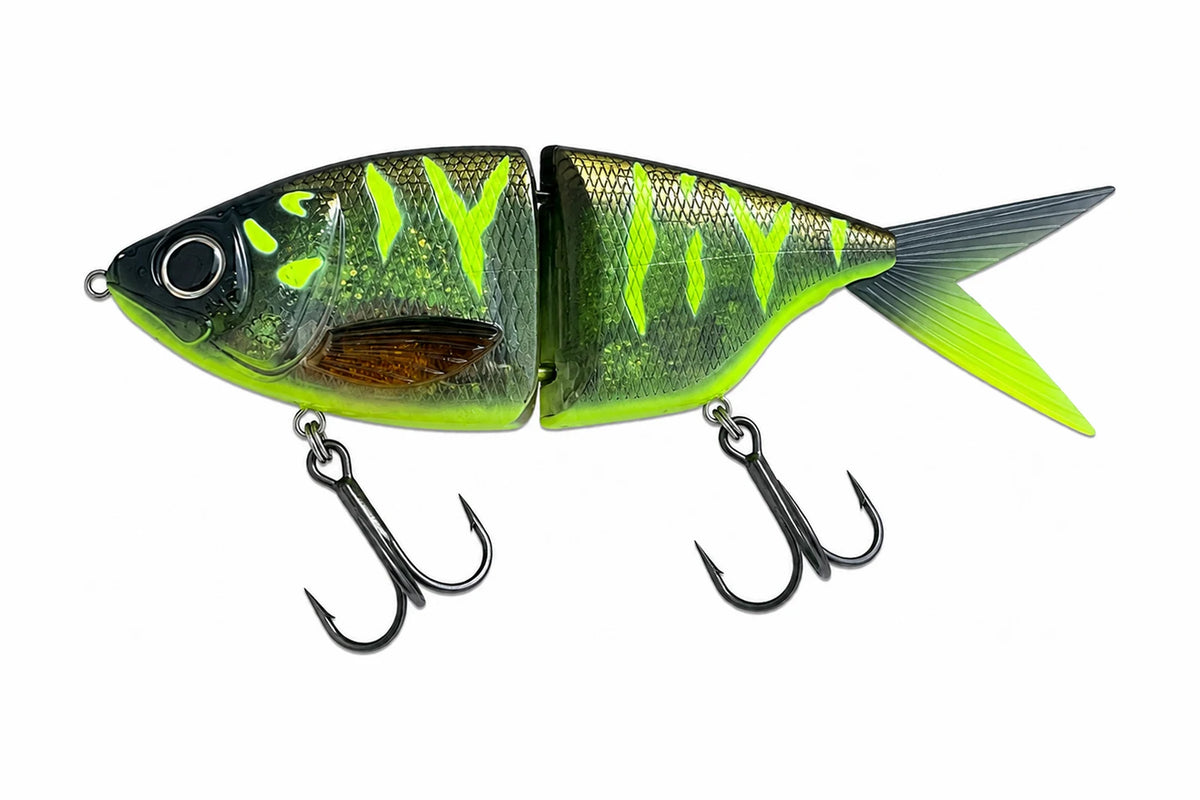
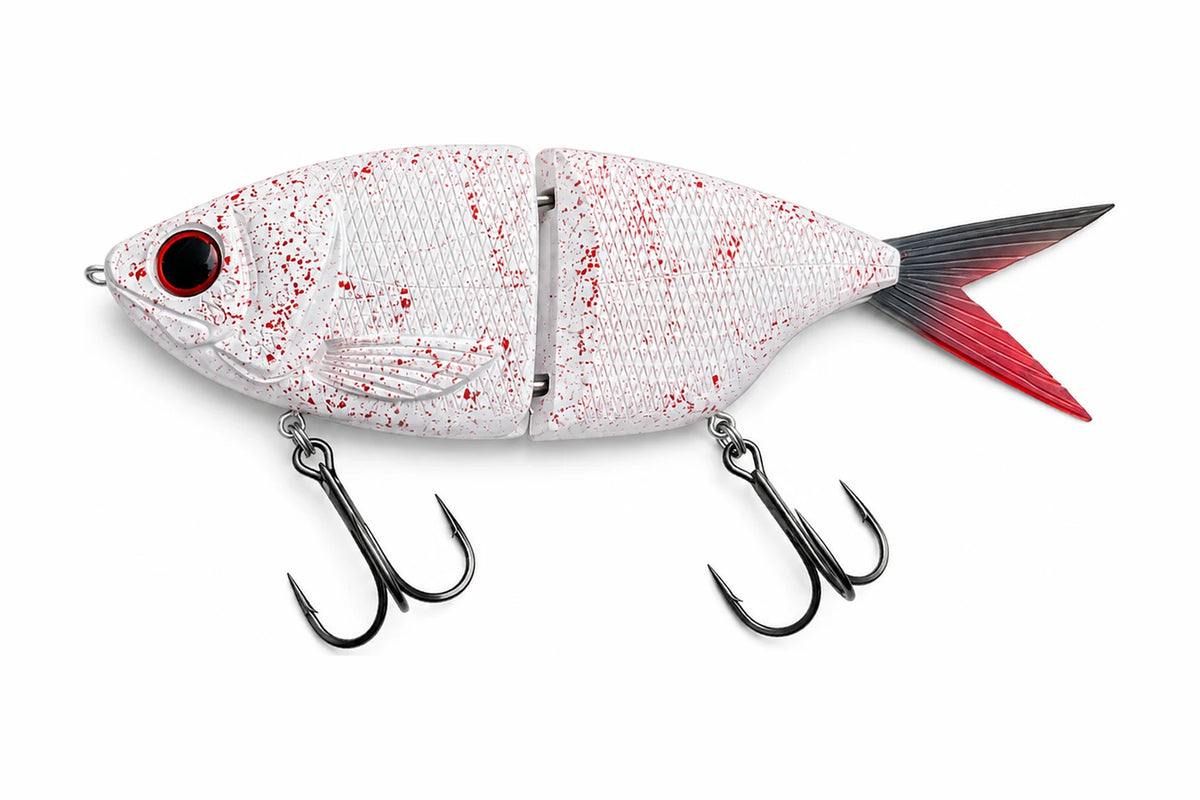
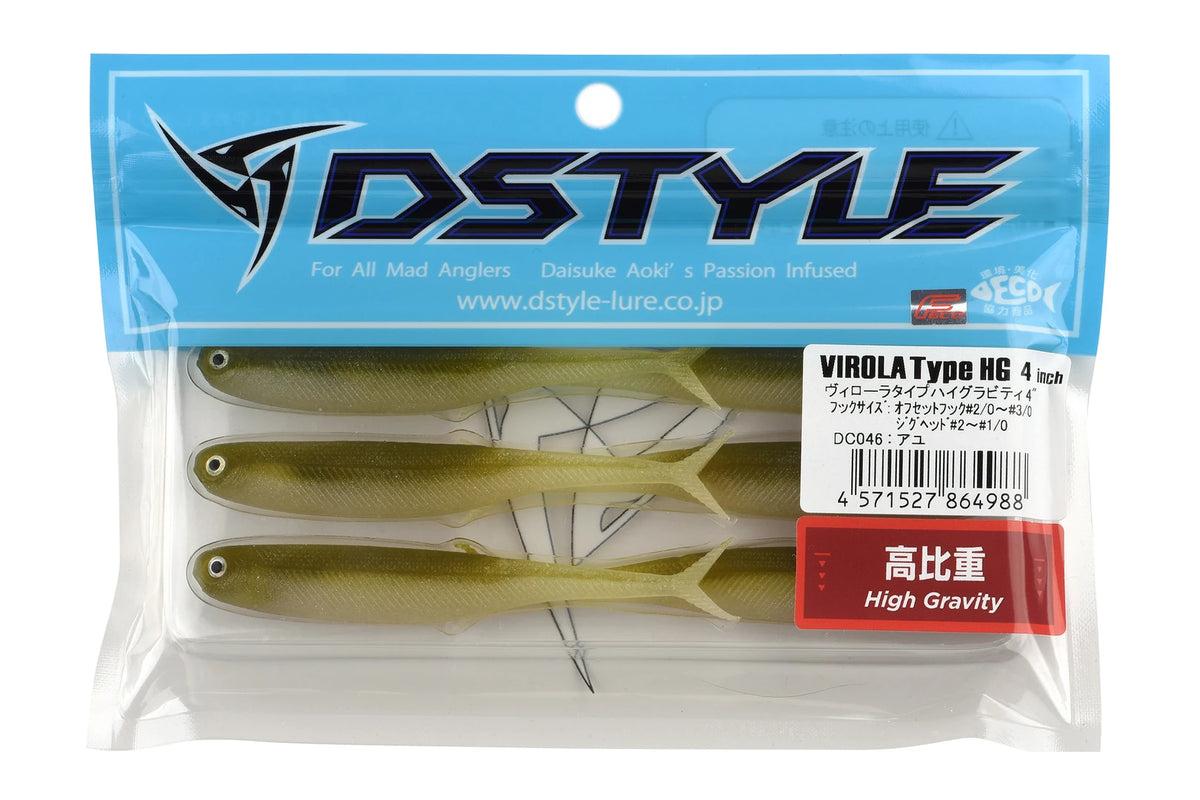
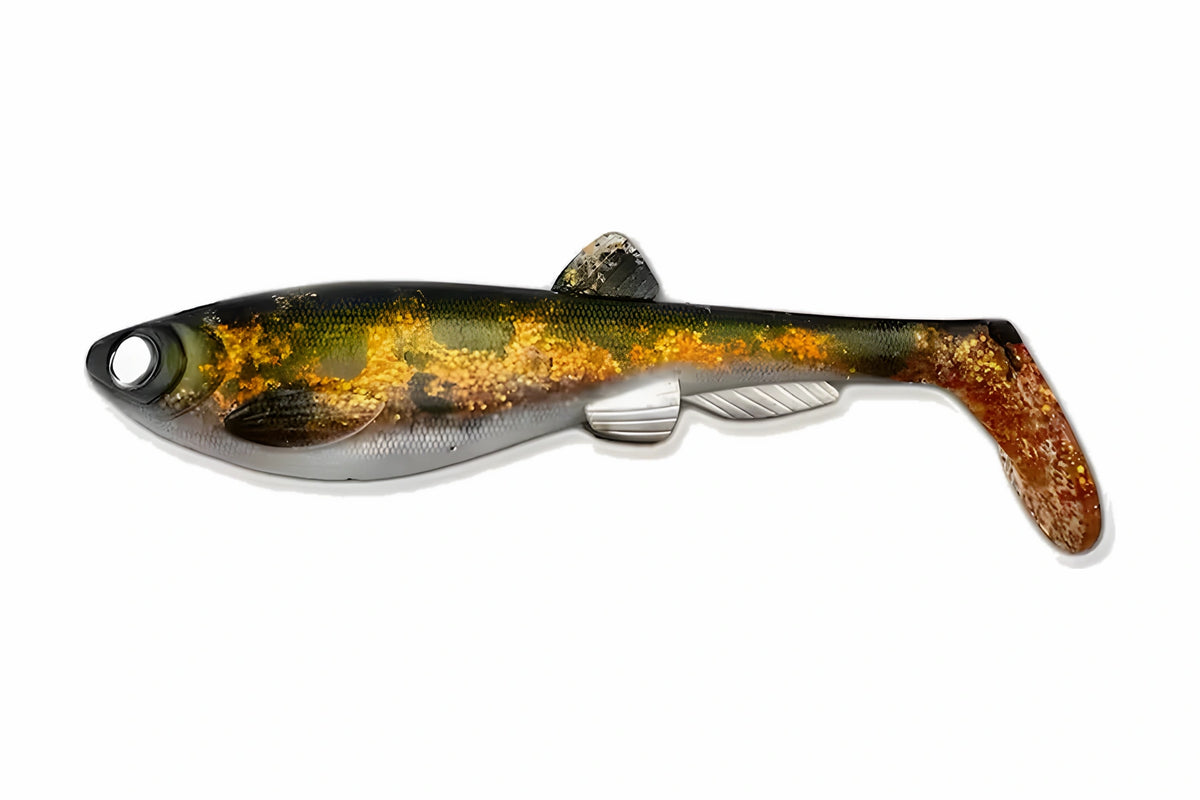
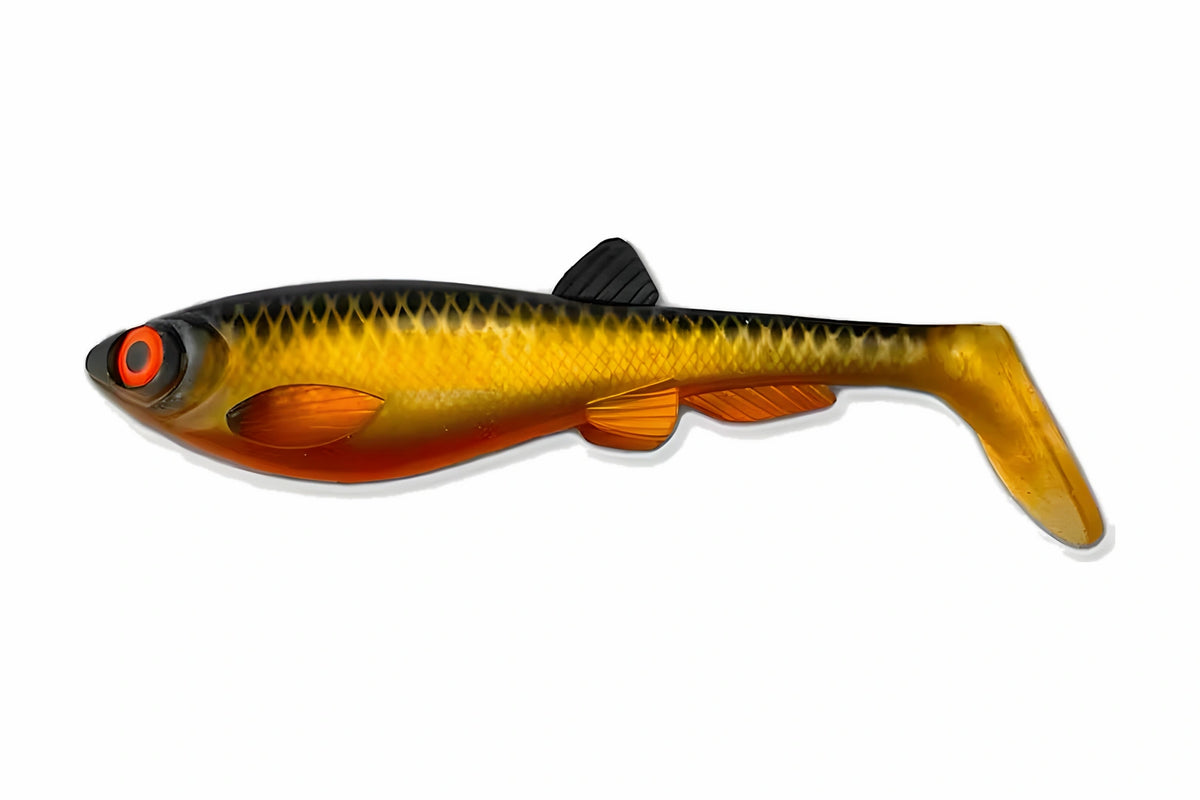
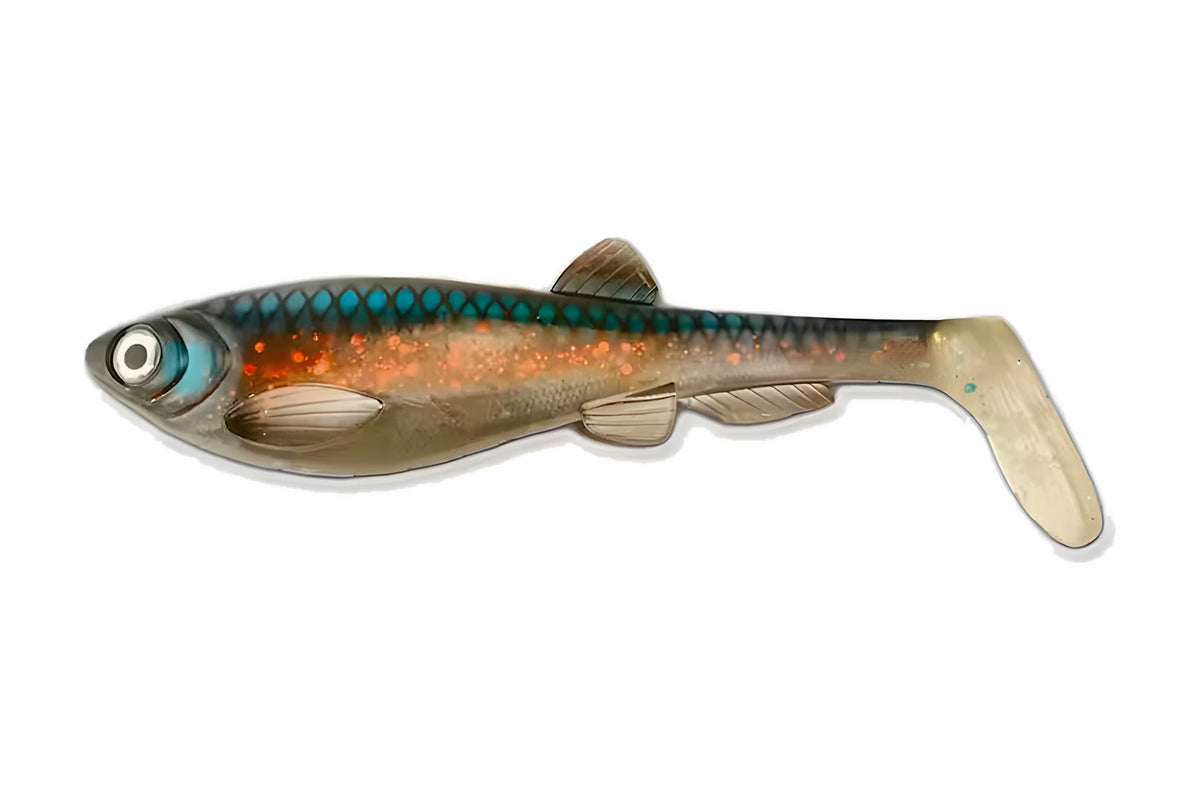
We stock eleven colours per size, split between Frapp's numbered range (#24, #26, #27, #28, #31, #33, #37, #39) and the PAL series (#PAL03, #PAL06, #PAL18).
The logic is the same as with any softbait. In clear water and on pressured spots, natural roach, smelt and brown-green tones tend to work best. In stained water, deep water or low light, higher-contrast and UV shades make the bait easier to track.
The PAL colours are Frapp's tournament series and follow that same split, with several built around contrast rather than realism.
A workable starter set is two naturals, one bright and one dark silhouette per size.
Don't Forget the Leader
Pike eat this lure — a 15 or 19 cm softbait gliding through midwater is exactly what they hunt — so fish a proper leader even when you are targeting zander.
The VMC Knotable Titanium lets you tie your own to length; the VMC Titanium Pike Leader in 50 cm is the ready-to-fish option. For heavier presentations, look at the BKK 7x7 Wire Leader HD or the Stroft NiTi Polywire. A thin, round braid like the Sufix Performance G-Core helps you stay in contact through the glide and the fall. Everything is in our lines and leaders section.
What to Fish Alongside It
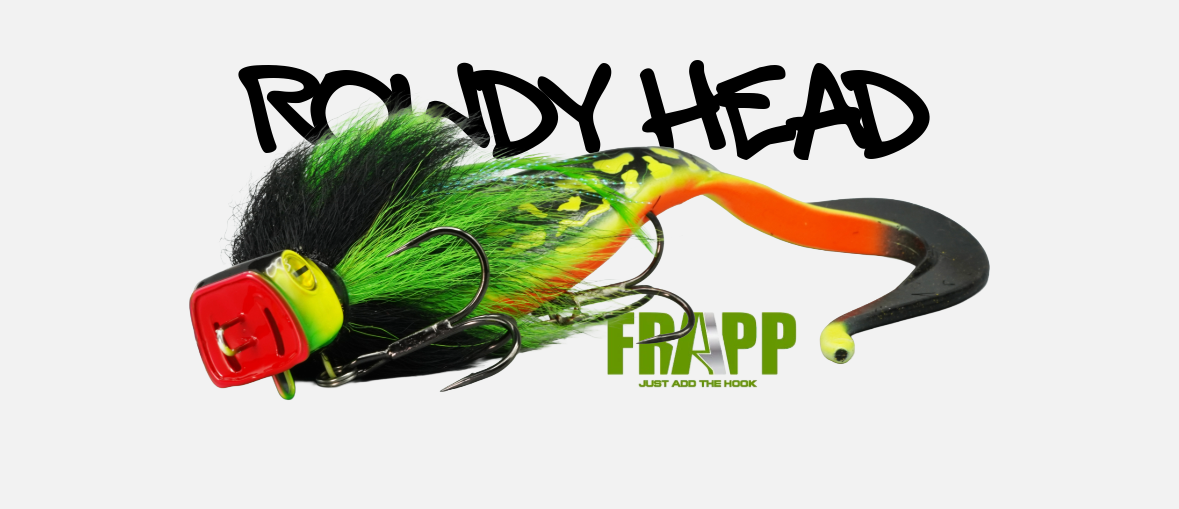
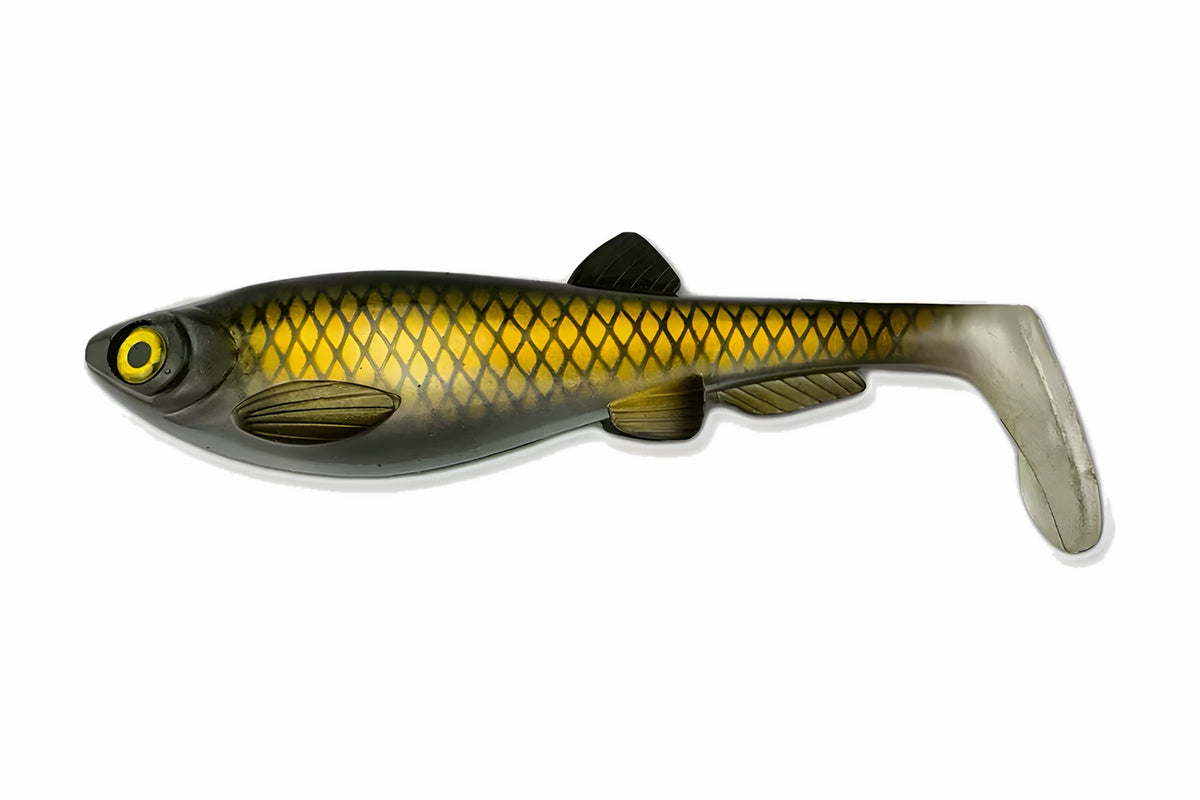
The Dotty Dart works best next to baits that do something different. The Frapp Placoid (6", 7", 8") gives you a fuller body when fish want more presence, the Frapp GekoSlug 7" offers a similar slim profile with a different tail, and the Frapp Double Croak (5.9", 6.5", 7.9") brings a completely different action. When you want noise and visibility instead of subtlety, the Frapp Rowdy Head with a Tricky Tail trailer is the loud counterpart.
A simple approach that often works: lead with something that makes noise, then follow up with the Dotty Dart on the fish that showed interest but did not commit.


A Closer Look at the Dotty Dart
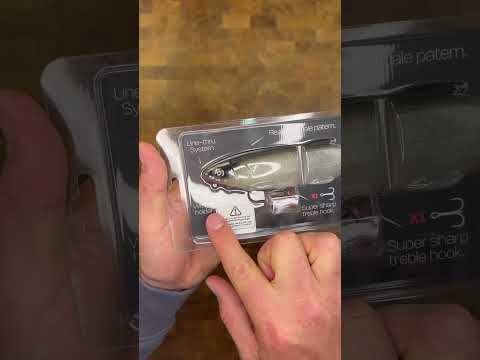
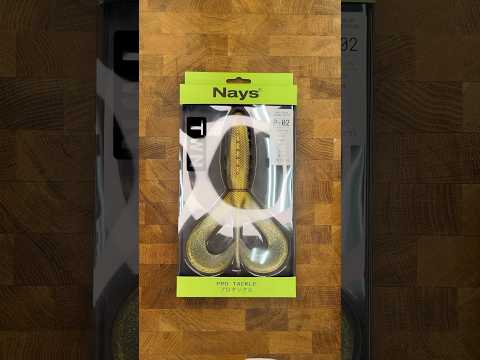
A V-tail softbait is harder to judge on paper than a paddle tail, because the action comes from you. In the video below we walk through the Dotty Dart in detail — the two sizes, the colours and how we rig it — so you know exactly what you are working with before your first session.
Conclusion
The Frapp Dotty Dart does not do much on its own, and that is what makes it useful. No paddle, no rattle, no built-in swimming action — just a slim, soft profile that darts on command, glides on the pause and hangs where you put it.
Four rigs, four situations: weightless over weed for pike, on a Cheburashka along a canal margin, on a screw-in weight for deeper water, or on a jig head when you need the bottom. Start with the 6" if you want the most versatile option, add the 7.5" for bigger fish and bigger water, and in most of those situations, fish it slower than feels right.
Browse the full Frapp range or explore our softbaits, hooks and terminal tackle to put the whole setup together.




Share:
Chasebaits Flacid Shad: The Ribbon-Tail Softbait That Triggers Fish
Savage Gear Wide Glide Scandal: Two Sizes, Three Retrieves